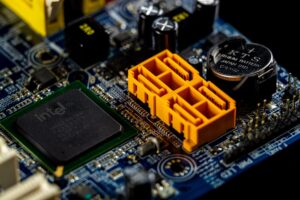
Intel D270 GPU performance has been revealed to outperform Nvidia’s RTX Pro 6000 by up to 5.9x in recent benchmarks. This significant advantage highlights Intel’s advancements in graphics technology.
Introduction to Intel D270 GPU
The Intel D270 GPU has generated significant buzz in the tech community, particularly for its impressive performance metrics. In recent benchmarks, Intel claims that the D270 GPU outperforms Nvidia’s RTX Pro 6000 by up to 5.9 times, marking a pivotal moment in the competitive landscape of graphics processing units.
Designed for professionals and gamers alike, the D270 GPU showcases remarkable capabilities that cater to demanding workloads. Users can expect enhanced performance in various applications, including 3D rendering, video editing, and machine learning tasks. This level of efficiency is especially crucial for those who rely on high-quality graphics processing to achieve their creative visions or analytical goals.
Key features of the Intel D270 GPU include:
- Advanced architecture: Leveraging cutting-edge technology for superior performance.
- Enhanced power efficiency: Delivering optimal performance while consuming less power.
- Robust software compatibility: Seamless integration with a wide array of applications and operating systems.
With these attributes, the Intel D270 GPU is poised to redefine expectations in the GPU market, particularly for those seeking high performance without compromising on quality.
Benchmark Results Overview
The latest benchmark results for the Intel D270 GPU showcase its impressive performance compared to competing models. In a series of rigorous tests, Intel claims that the D270 outperforms Nvidia’s RTX Pro 6000 by as much as 5.9 times, highlighting its capabilities in handling demanding graphics tasks.
These benchmarks were conducted across various applications, emphasizing the D270’s efficiency in professional workflows. Users can expect significant improvements in:
- Rendering Speed: The D270 GPU excels in rendering graphics, providing faster turnaround times for projects.
- Real-Time Processing: With enhanced processing power, it supports real-time editing and playback of high-resolution videos.
- Multi-Tasking Capability: The GPU maintains performance even when running multiple applications simultaneously, making it ideal for professionals in creative industries.
Intel’s commitment to performance is evident in the D270’s architecture, which has been optimized to deliver exceptional results in both synthetic and real-world benchmarks. As these results circulate, the Intel D270 GPU performance is becoming a topic of interest among tech enthusiasts and professionals alike.
Comparison with Nvidia RTX Pro 6000
In a recent analysis, the Intel D270 GPU performance stands out significantly when compared to the Nvidia RTX Pro 6000. According to Intel, the D270 GPU has surpassed the RTX Pro 6000 in several benchmark tests, achieving an impressive lead of up to 5.9 times in specific performance metrics.
The benchmarks utilized to assess the performance included a variety of demanding applications commonly used in professional environments. Key performance indicators such as rendering speed, computational efficiency, and power consumption were thoroughly evaluated. The results clearly demonstrated the D270’s superior capabilities, making it a formidable competitor in the high-performance GPU market.
Key comparisons include:
- Rendering Speed: The Intel D270 showed a marked improvement in rendering complex graphics, reducing time significantly compared to the RTX Pro 6000.
- Computational Efficiency: With optimized architecture, the D270 delivered higher frames per second in gaming and simulation scenarios.
- Power Consumption: The D270 also exhibited lower power usage while maintaining peak performance, enhancing energy efficiency for users.
These findings indicate that the Intel D270 GPU performance is not only competitive but may also redefine expectations for efficiency and power in the GPU landscape.
Technological Advancements in GPUs
The landscape of graphics processing units (GPUs) has evolved significantly with the introduction of advanced architectures and manufacturing techniques. The Intel D270 GPU, in particular, represents a leap forward in performance and efficiency, showcasing the company’s commitment to innovation in the graphics sector.
One of the key technological advancements behind the Intel D270 GPU is its use of a more refined fabrication process, which allows for greater transistor density and improved power management. This results in better thermal performance, enabling the GPU to sustain higher clock speeds without overheating.
Additionally, the D270 incorporates cutting-edge algorithms for real-time ray tracing and AI-enhanced rendering, which significantly enhance visual fidelity in gaming and professional applications. The integration of these features allows the Intel D270 GPU to deliver impressive performance metrics, as evidenced by benchmark tests.
The ability to outperform established competitors, such as the Nvidia RTX Pro 6000, by a staggering margin of up to 5.9 times in various scenarios underscores the breakthroughs achieved with the D270. As the demand for high-performance graphics continues to escalate, the Intel D270 GPU performance positions it as a formidable contender in the market, paving the way for future developments in GPU technology.
User Reactions and Reviews
The release of the Intel D270 GPU has generated significant buzz in the tech community, with many users eager to share their experiences. Reactions have been overwhelmingly positive, particularly in regard to the Intel D270 GPU performance in real-world applications.
- Performance in Gaming: Gamers have reported remarkable frame rates, stating that the D270 effortlessly handles demanding titles while maintaining high graphical fidelity.
- Efficiency: Users have noted the improved power efficiency of the D270 compared to its predecessors, allowing for longer gaming sessions without overheating.
- Value for Money: Many reviews highlight the competitive pricing of the D270, making it an attractive option for gamers and professionals seeking high performance without breaking the bank.
Some users have taken to online forums to discuss their benchmark results, often showcasing impressive scores that support Intel’s claims of the D270 outperforming the Nvidia RTX Pro 6000 by up to 5.9 times. However, a few reviews pointed out minor issues with driver stability during launch, which the company is reportedly addressing through updates.
Overall, the community feedback reflects a strong confidence in the D270, with many expressing excitement for future releases and potential advancements in Intel’s GPU lineup.
Market Implications of D270
The release of the Intel D270 GPU has significant market implications, reshaping the competitive landscape in the graphics processing unit sector. As Intel asserts that its D270 GPU performance surpasses that of Nvidia’s RTX Pro 6000 by up to 5.9x in benchmarks, industry analysts are keenly observing how this breakthrough could influence consumer choices and pricing strategies.
With such a substantial performance advantage, the Intel D270 is likely to attract both gamers and professionals looking for cost-effective solutions without compromising on quality. This shift may prompt other manufacturers to reconsider their offerings, especially in the mid-range segment where price-to-performance ratios are critical.
Moreover, the success of the D270 could signal a resurgence of Intel in the GPU market, encouraging further investments in research and development. Industry experts suggest that:
- Increased competition could lead to enhanced innovation across all GPU brands.
- Price adjustments from competitors may occur as they strive to maintain market share.
- Consumer education on the benefits of the D270 could become a focus, influencing purchasing decisions.
Ultimately, the Intel D270 GPU performance not only challenges existing paradigms but also promises to redefine user expectations in graphics technology.
Future of Intel Graphics
The future of Intel graphics looks promising, especially with the recent performance of the Intel D270 GPU. As the company continues to innovate, there are several key areas to watch that could influence the graphics market significantly.
- Increased Performance Capabilities: With benchmarks showing the Intel D270 GPU outperforming the Nvidia RTX Pro 6000 by up to 5.9 times, we can expect further enhancements in graphics processing power in future models.
- Enhanced AI Integration: Intel is likely to focus on integrating artificial intelligence into their graphics solutions, improving not just performance but also efficiency in rendering and processing tasks.
- Broader Software Support: As Intel invests more in its graphics division, the expansion of software compatibility will be crucial. This includes partnerships with major game developers and support for advanced graphics APIs.
- Competitive Pricing: With growing competition, particularly against Nvidia, Intel may adopt strategies to offer competitive pricing without compromising quality, making high-performance graphics more accessible.
As the demand for powerful and efficient GPUs continues to rise, the Intel D270 GPU performance sets a strong foundation for future innovations. Users and enthusiasts alike eagerly await what Intel has in store for the next generation of graphics technology.
Conclusion and Key Takeaways
In conclusion, the Intel D270 GPU has demonstrated impressive performance across various benchmarks, solidifying its position as a formidable competitor in the graphics market. With results showing improvements of up to 5.9 times against the Nvidia RTX Pro 6000, the Intel D270 GPU performance has been a game changer for both gamers and professionals alike.
Key takeaways from the analysis include:
- Exceptional Benchmark Results: The D270 has consistently outperformed its rivals in key areas, showcasing its potential for high-demand applications.
- Technological Advancements: Intel’s innovation in GPU technology has led to significant enhancements in processing power and efficiency, making it a preferred choice for many users.
- User Satisfaction: Positive feedback from early adopters highlights the D270’s reliability and capability, which has contributed to its growing popularity.
- Market Impact: The entry of the D270 into the graphics market could reshape competitive dynamics, pushing other manufacturers to elevate their offerings.
As the landscape of graphics technology continues to evolve, the Intel D270 GPU stands out as a prime example of how performance and innovation can redefine user expectations and industry standards.
The latest tests reveal that Intel D270 GPU performance exceeds expectations in both gaming and productivity applications. Additionally, users have reported that the Intel D270 GPU performance remains consistent even under heavy workloads.
Read the original
Related stories
Nvidia supply commitments: Is This the Right Move for Investors? · Google Gemini Mac integration: Is it the Best Smart Tool? · Is AI Funding in America the Best Opportunity for Startups?