
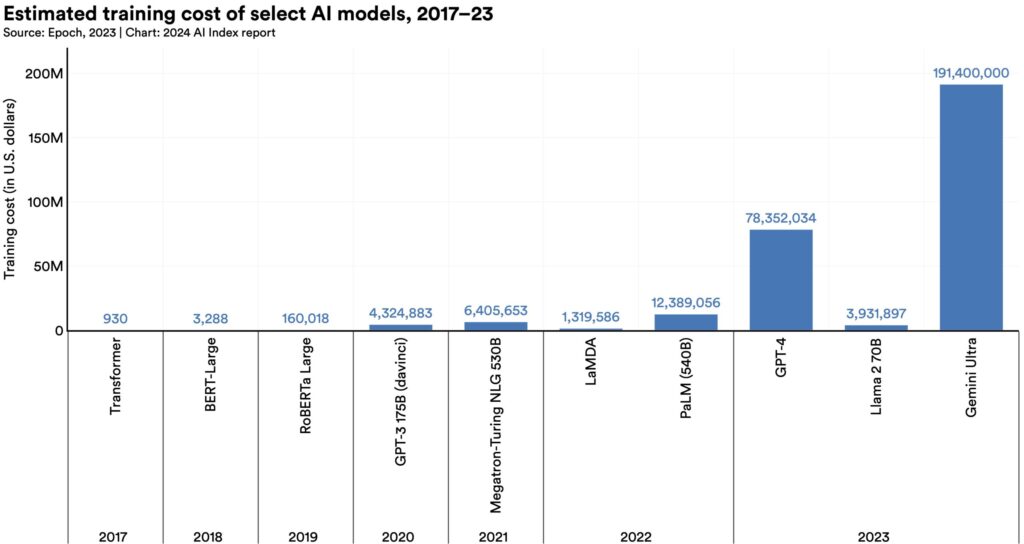
AI models are becoming increasingly important in today’s technology landscape. With new innovations like MiniMax M3.1 and OpenAI’s permanent assistant, the future looks promising.
Overview of Recent AI Model Launches
The landscape of artificial intelligence continues to evolve rapidly, with several notable AI models being launched in recent months. Among these, the MiniMax M3.1-Flash-Preview stands out, offering innovative features designed to enhance user interaction and data processing. This model aims to set a new standard for performance in various applications.
In addition, OpenAI is set to introduce a permanent AI assistant, which promises to revolutionize how users engage with technology. This assistant is expected to leverage advanced AI models to provide seamless support for everyday tasks.
Another significant development is the beta testing of Claude Sonnet 5.5. This model focuses on improving natural language processing capabilities, allowing for more nuanced conversations and better understanding of user intent. As these AI models are rolled out, they represent just a fraction of the innovations transforming the field, highlighting the continuous advancement in AI technology.
What is MiniMax M3.1?
The MiniMax M3.1 is one of the latest advancements in AI models, designed to enhance efficiency and accuracy in various applications. This model features a streamlined architecture that allows for faster processing and improved performance in complex tasks.
Key highlights of the MiniMax M3.1 include:
- Enhanced Learning Algorithms: The M3.1 incorporates advanced algorithms that enable better understanding and prediction capabilities.
- Scalability: It is built to adapt to different scales of operation, making it suitable for both small businesses and large enterprises.
- User-Friendly Interface: The model offers an intuitive interface that simplifies the integration into existing systems.
- Robust Security Features: Security measures have been prioritized, ensuring that user data remains protected throughout its usage.
As organizations continue to explore the potential of AI models, the MiniMax M3.1 stands out for its innovative features and practical applications.
OpenAI’s Permanent AI Assistant: What to Expect
OpenAI is set to revolutionize the landscape of AI models with the introduction of its permanent AI assistant. This innovative tool aims to provide users with a more seamless and integrated experience across various applications. As companies increasingly look for reliable solutions, the expectation is that this AI assistant will offer enhanced personalization and improved adaptability.
Users can anticipate a range of features designed to make interactions more intuitive. Key highlights include:
- Contextual Awareness: The assistant will maintain an understanding of user preferences and past interactions.
- Multi-Tasking Capabilities: Users can expect the ability to handle multiple requests simultaneously.
- Continuous Learning: The model will evolve based on user feedback and behavior, improving its responses over time.
The release of OpenAI’s permanent AI assistant comes at a critical time when businesses are searching for effective AI models that can enhance productivity and customer engagement.
Claude Sonnet 5.5 Beta Testing Insights
As the landscape of AI models continues to evolve, the beta testing phase of Claude Sonnet 5.5 has garnered significant attention. This latest iteration promises notable enhancements in performance and usability, setting a new benchmark for AI development.
During the beta test, users reported various insights, highlighting both strengths and areas for improvement. Key features of Claude Sonnet 5.5 include:
- Advanced Natural Language Processing: Improved understanding and generation of human-like text.
- Customization Options: Users can tailor the model’s responses to fit specific needs, enhancing interaction.
- Seamless Integration: Compatibility with existing applications and workflows was emphasized.
Participants in the beta testing phase expressed enthusiasm about the potential of Claude Sonnet 5.5 to redefine user experience with AI models. Feedback is currently being collected to refine the model before its official launch, ensuring it meets the high expectations of developers and consumers alike.
The Impact of AI Models on Businesses
The adoption of AI models has significantly transformed business operations across various industries. Organizations are leveraging these advanced technologies to enhance efficiency, drive innovation, and improve customer experiences. As companies integrate AI into their workflows, they are finding new ways to streamline processes and reduce operational costs.
Notably, businesses utilizing AI models can analyze data more effectively, enabling better decision-making through insights derived from vast datasets. This data-driven approach allows companies to anticipate market trends and customer needs, fostering a proactive rather than reactive business strategy.
Furthermore, AI models are instrumental in automating routine tasks, freeing up employee time for more strategic initiatives. As a result, businesses can focus on creativity and problem-solving, ultimately driving growth and competitiveness in an increasingly digital marketplace.
As we continue to explore the capabilities of AI models, their impact on business is expected to deepen, shaping the future of industries worldwide.
Future Trends in AI Model Development
As we look toward the future, the evolution of AI models is poised to reshape various industries significantly. One prominent trend is the increasing emphasis on ethical AI, ensuring that models are developed with bias mitigation and transparency as core principles. This shift will likely lead to more responsible deployment and enhanced public trust in AI technologies.
Another trend is the integration of federated learning, allowing for data privacy while still enabling the training of robust models. This decentralized approach not only enhances user privacy but also opens up new avenues for collaboration across sectors.
Moreover, the advent of multimodal AI models, which can process and combine various types of data, is expected to improve the versatility and effectiveness of AI applications. These innovations will further drive the demand for advanced AI models that can handle complex tasks, providing businesses with a competitive edge in an increasingly data-driven world.
By Stanford Institute for Human-Centered Artificial Intelligence (permission obtained by email from the AI index research manager) via Openverse
