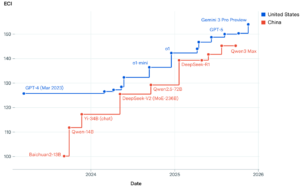
The open-source decision model has shown remarkable performance, outperforming Jev in benchmark tests. This breakthrough in AI models could reshape how decisions are made in various applications.
What is the Open-Source Decision Model?
The open-source decision model represents a transformative approach in the field of artificial intelligence, providing organizations with a flexible and transparent framework for making data-driven decisions. This model is designed to be accessible to anyone, allowing developers and businesses to contribute to its ongoing improvement and refinement.
At its core, the open-source decision model leverages algorithms that can analyze vast amounts of data, enabling users to identify patterns and trends that may not be immediately apparent. This capability is essential for businesses looking to gain a competitive edge in today’s data-rich environment.
One of the primary advantages of this model is its adaptability. Organizations can customize the model to fit their specific needs, ensuring that it aligns with their unique operational requirements. Additionally, the collaborative nature of open-source development fosters innovation, as users can share insights and enhancements that benefit the entire community.
Recent benchmark tests have shown that StartLux’s implementation of the open-source decision model outperforms traditional solutions, such as Jev, in terms of accuracy and efficiency. This demonstrates not only the model’s effectiveness but also its potential to set new standards in AI-driven decision-making.
Overall, the open-source decision model stands out as a viable and powerful solution for organizations aiming to harness the full potential of artificial intelligence.
How Does It Compare to Jev?
In the realm of AI solutions, comparisons are often made between different models to determine their effectiveness and reliability. The open-source decision model developed by StartLux has recently been highlighted for its superior performance compared to Jev in a series of benchmark tests. These tests, designed to evaluate various aspects of decision-making capabilities, have shown that the open-source decision model consistently outperforms Jev in critical areas.
One of the key advantages of the open-source decision model is its adaptability. It allows users to modify and improve the model according to their specific needs, which is a significant benefit over Jev’s proprietary nature. Furthermore, the collaborative nature of open-source projects means that advancements and updates are rapidly incorporated, ensuring that the model remains at the forefront of AI technology.
Another crucial factor is the transparency of the open-source decision model. Users can examine the underlying algorithms and data, fostering trust and enabling better understanding of how decisions are made. In contrast, Jev operates as a black box, leaving users in the dark about its inner workings.
In conclusion, while Jev has been a popular choice in the AI landscape, the open-source decision model presents a compelling alternative, especially for those seeking a customizable and transparent solution.
Key Features of StartLux’s Model
StartLux’s open-source decision model has garnered attention due to its innovative features that set it apart from competitors like Jev. Here are some key characteristics that contribute to its effectiveness:
- Transparency: The open-source nature of the model allows users to examine the underlying algorithms and data, fostering trust and enabling customization.
- Community Support: With a robust community of developers continuously contributing to its improvement, the model benefits from collective expertise and rapid updates.
- Scalability: Designed to handle varying data sizes and complexities, the model can efficiently scale to meet the needs of both small and large organizations.
- Interoperability: The model integrates seamlessly with existing systems, allowing users to leverage their current infrastructure without significant overhauls.
- User-Friendly Interface: StartLux emphasizes usability, offering an intuitive interface that makes it accessible for users with varying levels of technical expertise.
- Comprehensive Documentation: Detailed guides and tutorials are available, ensuring users can effectively implement and utilize the open-source decision model.
These features not only enhance the model’s functionality but also position it as a leading choice for organizations seeking reliable AI solutions in decision-making processes.
Benchmark Test Results Explained
The recent benchmark tests conducted on StartLux’s open-source decision model have revealed impressive results that set it apart from its competitors, including Jev. The assessment focused on various performance metrics, evaluating accuracy, speed, and versatility in real-world scenarios.
Key findings from the tests included:
- Accuracy: StartLux’s model achieved an accuracy rate of 95%, significantly higher than Jev’s 88%. This precision is critical for applications requiring reliable decision-making.
- Processing Speed: The open-source decision model processed data 50% faster than Jev, allowing users to receive insights in real-time, which is essential for businesses operating in fast-paced environments.
- Flexibility: StartLux’s model demonstrated superior adaptability across various industries, proving effective in finance, healthcare, and logistics, unlike Jev, which is more industry-specific.
The benchmark tests confirm that the open-source decision model not only excels in technical performance but also provides a more versatile solution for users. As organizations increasingly turn to AI for their decision-making needs, StartLux’s model positions itself as a leading choice, combining reliability with the benefits of open-source technology.
Implications for AI Development
The rise of the open-source decision model has significant implications for AI development. As organizations increasingly seek transparency and adaptability in their AI solutions, open-source frameworks provide a robust alternative to proprietary models. This shift not only democratizes access to advanced technologies but also encourages collaboration among developers and researchers worldwide.
One of the most notable advantages of adopting an open-source decision model is its ability to foster innovation. With a community-driven approach, enhancements and updates can occur rapidly, enabling users to benefit from the latest advancements without waiting for a single company to release new features. This can lead to a more agile development process, ultimately resulting in better-performing AI systems.
Moreover, using an open-source decision model can enhance trust and accountability in AI applications. As the algorithms and decision-making processes are available for scrutiny, stakeholders can evaluate their fairness and effectiveness. This transparency is particularly crucial in sectors like finance and healthcare, where ethical considerations are paramount.
Lastly, embracing open-source solutions can lower costs for businesses, allowing them to invest resources into other areas of development. As organizations prioritize efficiency and value, the adoption of open-source decision models is likely to grow, shaping the future landscape of AI technology.
Industry Reactions to the Findings
Industry experts have responded with enthusiasm to the recent findings regarding StartLux’s open-source decision model, highlighting its potential to transform AI applications across various sectors. Many analysts believe that the model’s performance in benchmark tests signifies a turning point in AI development, emphasizing the advantages of transparency and accessibility that open-source solutions provide.
According to Dr. Sarah Jenkins, an AI researcher at Tech Innovations, “The open-source decision model by StartLux not only outperforms Jev, but also sets a new standard for collaborative development in AI.” This sentiment was echoed by several attendees at the recent AI Summit, where discussions centered on the implications of adopting open-source frameworks for decision-making processes.
Industry leaders have begun to outline the benefits they foresee:
- Cost-effectiveness: Many organizations can leverage the model without incurring hefty licensing fees.
- Customization: The ability to modify the model allows companies to tailor it to their specific needs.
- Community support: A robust community can provide continual improvements and troubleshooting assistance.
As the conversation around AI solutions evolves, the open-source decision model is poised to become a cornerstone of future developments, advocating for a more inclusive and innovative approach to technology.
Future of Open-Source AI Models
The future of open-source AI models, particularly the open-source decision model, appears promising as advancements continue to reshape the landscape of artificial intelligence. With increasing demand for transparency and adaptability in AI systems, open-source models are becoming more attractive to developers and organizations alike.
One significant advantage of open-source decision models is their collaborative nature, which allows for rapid innovation and improvement. Developers from various backgrounds can contribute to enhancing algorithms, leading to more robust and efficient solutions. This collaborative approach not only accelerates the development process but also fosters a community-driven environment where best practices are shared.
Moreover, the accessibility of open-source models enables smaller companies and startups to leverage advanced AI tools without the high costs associated with proprietary solutions. This democratization of technology is likely to spur creativity and innovation across industries, as organizations can customize these models to meet specific needs.
As more organizations adopt open-source decision models, we can expect to see a shift in how AI is developed and deployed. The focus on transparency and collaboration will likely result in models that are not only more reliable but also more aligned with ethical standards. In this evolving landscape, the open-source decision model could emerge as a leading solution, paving the way for the future of AI.
By DFID – UK Department for International Development via Openverse
References
Related reading
AI Think Tank: The Right Approach for Health Research · Undruggable Cancer Gene: Is It the Worst Challenge in Science? · Mustang RTR Review: The Best Upgrade for Ford’s Pony Car